Anyone who knows me knows that I am list-maker. I have lists everywhere, on a variety of topics. They are not all "to do" lists. Not all of them. I learned a long time ago that I could not hold on to everything that was being thrown at me. Folks have heard me say, "I write things down so I don't HAVE to remember them." And here's why:
We only have so many attention hooks.
I first learned the concept of attention hooks from Jack Canfield. Yeah, the originator of the Chicken Soup for the Soul phenomenon. I picked up one of Jack's seminars on tape early in my career (I don't even remember the title), and he talked about attention hooks and the limitation they put on our lives.
What is an attention hook? It's the place in your brain where you "hang" all of the things that require your attention. Need to sign your daughter's permission slip? That goes on an attention hook. Have to pay a bill? Attention hook. Need to sew a button? Attention hook. And so on.
 Honestly, when Jack mentioned attention hooks, this was the image that popped into my head: a neat, perfectly straight row of hooks, in order of priority. Oh, and look, there are a limited number of them.
I was about half right. We do, in fact, have a limited capacity for hanging on to all of that "stuff" that is clamoring for our attention. This is where lists come in. But more on that in a moment...
I was also right that the hooks are prioritized. I was very wrong about the "neat" part, and that the hooks stay prioritized the same way.

The truth is, we are bombarded with things that need our attention, from the super important to the frivolous. And what is important to us changes every moment.
Did you catch that? What is important to your brain CHANGES. EVERY. MOMENT. I think of the movie "Up" and the dog with the collar that allows us to hear his thoughts. "Squirrel!" Yeah, ADD is not only a difficult disorder, it is becoming a way of life for all of us. Why?
Not enough attention hooks.
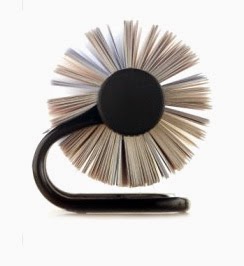 It is not like you can keep adding attention hooks to a never-ending wall. Our brain is not a rolodex with an unlimited supply of blank cards. Do not mistake me. There ARE blank hooks (or blank cards). But they may be out of reach, hidden behind a large item that is hogging multiple hooks. Or you are just too tired to put one more thing on the wall.
And this was the point Jack was making, I believe. Whether your hooks are organized, prioritized, large or small, you only have a few. And if something is taking a hook, it takes it until you deal with it. That is, until you do the thing or remove it from the hook.
That broken toaster in the basement is calling you.
That email you meant to answer is going to keep popping up on your radar.
Your growling stomach is attacking hook #1.
And it will continue this way until/unless you do something about it. What are your choices?
Obviously, Jack recommended that you deal with the items on the hooks by Doing, Dumping/Donating/Filing, or Delegating. Fix the toaster or fling it (in the garbage/donate). Eat something. Respond to that email. Do what it takes to clear the hook.
And I do those things. When something pops in my head, if I can do it in 5 minutes or less, I take care of it. But what if I'm thinking about that toaster when I am at the gas station? And by the time I get home, a different attention hook will have moved up the line. In my ever-shuffling priorities, some attention hooks only see the light once in a blue moon. And yet, I am still using that hook, expending (unconscious) mental energy on it, even when I am not consciously aware of it. I have limited hooks, and most of the time, I am not aware of which hooks have been full the longest.
Make a list. I have a home improvement list, for example, that has all of the things I need to do for the house. Big stuff (clean off the roof/gutters) and little stuff (fix that piece of base moulding that keeps popping off in the kitchen). And the hook just says "home improvement."
I have another list that is sewing/repairs. I need to sew on a button on a coat. I have a bunch of new fabric that needs to be washed. And the hook says "sewing."
Getting the pattern? So when I am at the gas station, thinking about the toaster, I open my iPhone, open my lists, and check to see if "toaster" is on the appropriate list. Toaster is there -- on the "home improvement" list. Collecting dust. And that's when I decide: toaster goes to the garbage list. I am never going to fix it.
When I get home, it goes in the garbage. And the hook it occupied (because it had wandered off the "home improvement" list and invaded a solo hook), is now free. And wow! I crossed off something on the list at the same time!

I don't look at all of them every day. I think there are three that I get in to regularly: Daily To Do, Work, Groceries/Cooking. Some of these overlap, of course.
But you get the idea. Sure, I have limited hooks. I also have long pieces of paper hung from each one. And a cat fraying the end nearest the floor. I better get to that...
What are your tips for freeing your attention hooks?

